
Late updated: 30 Dec 2025 13:12
Written by: Daniel Harper
Creative Solutions For Maximising Small Home Spaces: Expert Tips And Tricks
Living in a small home presents unique challenges, but with the right strategies, it can become a functional and stylish retreat. By employing creative solutions, we can transform limited spaces into areas that cater to our needs without sacrificing comfort or aesthetics. Utilising vertical spaces, opting for multifunctional furniture, and implementing clever storage solutions are key strategies to maximise every square inch of a small home.

Modern design innovations enable us to balance practicality with style. From ingenious furniture choices to smart layout changes, there are numerous ways to create an inviting environment that maximises the potential of compact areas. This exploration delves into how intentional design can enhance both organisation and liveability in small homes.
As we delve into these strategies, it's evident that even the smallest adjustments can have a significant impact. Whether you're grappling with an apartment or a tiny house, these creative solutions will guide you in transforming your home into a seamless blend of form and function.
Key Takeaways
- Embrace multifunctional furniture to enhance space efficiency.
- Make use of vertical space for storage and décor.
- Adopt smart design layouts to improve home organisation.
Fundamental Creative Solutions for Maximising Small Home Spaces
Maximising a small home space requires strategic and creative approaches. By employing multifunctional furniture, leveraging vertical storage, and crafting flexible room layouts, we can make the most of every square foot in compact living settings.
Multi-Functional and Modular Furniture
In small spaces, multi-functional and modular furniture is essential. Pieces like sofa beds and extendable dining tables not only serve dual purposes but also help conserve valuable floor space. Storage ottomans double as seating while hiding away clutter. Modular furniture, with its ability to adapt and rearrange, offers flexibility in creating functional living areas that suit our needs.
Nesting tables are perfect for small spaces, as they can be tucked away when not in use and pulled out when extra surfaces are needed. These pieces are designed to adapt to various uses, making them a practical choice in compact environments. By combining form and functionality, we create an efficient and comfortable home.
Smart Vertical Storage and Shelving
Incorporating vertical storage solutions is another effective strategy. Tall cabinets and floating shelves maximise wall space, freeing up the floor. Pegboards are a versatile option, allowing us to hang utensils or tools neatly and accessibly. This method prevents overcrowding and ensures easy access to items.
Shelving units designed to reach ceiling heights offer ample storage without encroaching on the limited floor space. Floating shelves, strategically placed, add style and utility, holding everything from books to decorative items. With clever vertical storage, we transform unused vertical surfaces into valuable, organised spaces.
Flexible Zoning and Room Dividers
Creating distinct zones within a small home contributes to a sense of organisation and functionality. Room dividers, such as folding screens, can separate areas for privacy or different activities. These can be shifted or removed to adjust the space as needed.
Using furniture to create zones is another effective strategy. For instance, a sofa can delineate the living room from the dining area without physical barriers. This approach enhances the flow of the space, making small areas feel more open and comfortable. Lofted beds cleverly utilise vertical space, freeing the floor below for work or leisure activities. Engaging flexible zoning ensures that even the smallest of spaces are optimized for diverse uses.
Innovative Design and Storage Strategies for Compact Living
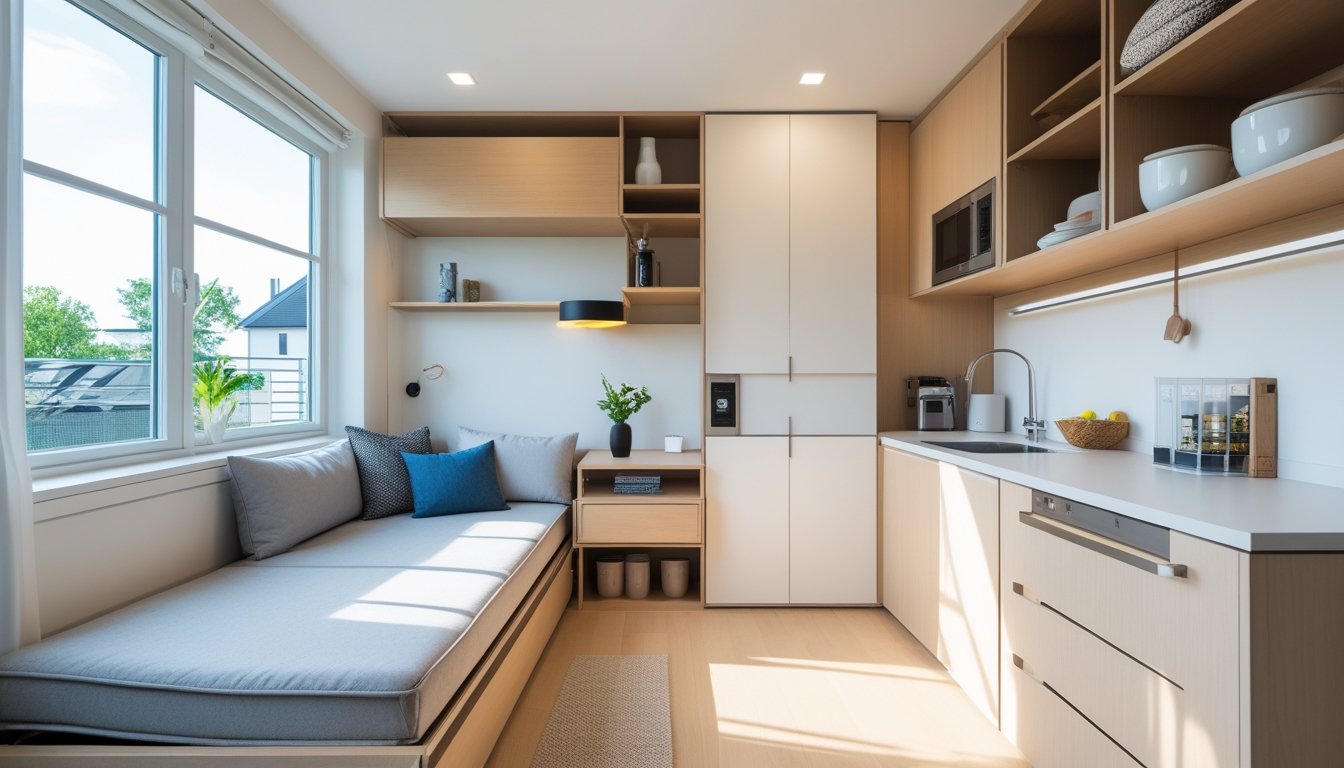
In compact homes, creative strategies can transform limited space into areas that are both functional and aesthetically pleasing. We will explore how hidden storage, clever lighting ideas, and clear furniture can maximise space and improve living environments.
Hidden Storage and Built-In Solutions
In small homes, efficient storage is crucial. Hidden storage solutions can make everyday living more organised and decluttered. Built-in drawers and under-bed storage units can utilise otherwise wasted space. This approach keeps items out of sight yet easily accessible. Furthermore, integrating smart storage solutions like fold-down tables and sliding doors can enhance functionality without sacrificing style. Over-the-door organisers and decorative baskets add practicality and a touch of personality to any room.
Incorporating hidden storage within furniture maximises space. A wall-mounted desk or a compact reading nook with built-in shelves are excellent ways to maintain order and accessibility while making the most of limited room. Regular decluttering ensures that storage solutions remain effective, keeping spaces tidy and stress-free.
Maximising Light, Colour, and Visual Space
Utilising light and colour strategically can dramatically change perceptions of space. Effective lighting, such as wall sconces or lights on dimmer switches, can create a sense of depth and dimension. Reflective surfaces like mirrors open up small areas, making them feel more expansive. Placed thoughtfully, mirrors can reflect natural light throughout a room, enhancing brightness and airiness.
Colour also plays an essential role in maximising space. Light colours on walls and ceilings can make a room feel larger and more open. Incorporating vertical gardens or hanging plants adds visual interest without taking up floor space. By combining light and natural greenery, we create harmonious, inviting spaces that invite relaxation and comfort.
Clear, Reflective, and Space-Enhancing Furniture and Features
Furniture choices greatly impact the perception of space. Clear furniture, such as acrylic tables and chairs, prevents visual clutter and allows light to flow through a room, maintaining a light and open feel. Reflective surfaces not only enhance lighting but also contribute to a modern and chic aesthetic. Combined, they create an illusion of more space.
When selecting furniture, space-saving ideas like open shelving can provide storage while keeping rooms feeling airy. We should consider multi-functional pieces that serve various purposes without overwhelming the room. Transparent furniture and space-enhancing features lead to flexible and welcoming environments, no matter the home's size.
Frequently Asked Questions
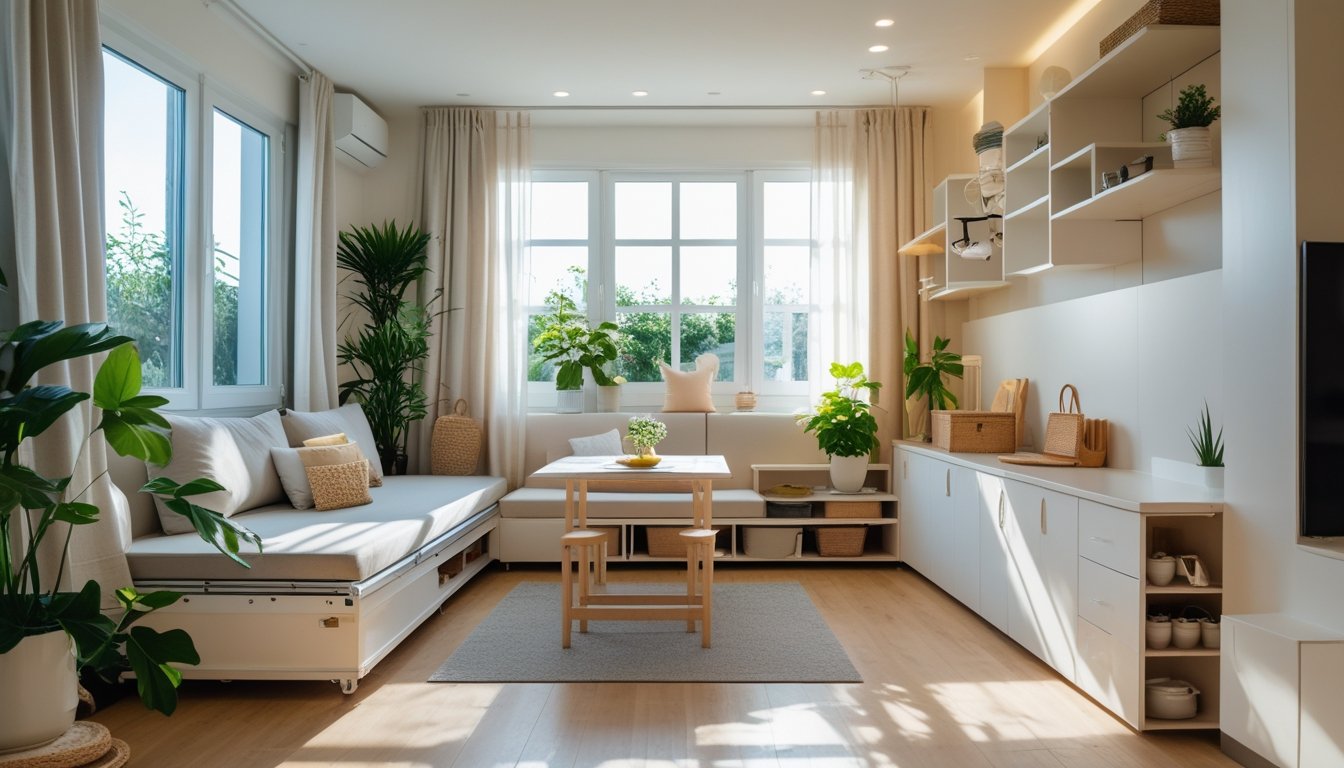
We address common inquiries about optimising small living spaces. Our focus is on practical furniture solutions, effective storage ideas, and lighting techniques that enhance space perception.
How can multi-functional furniture be utilised to save space in a small home?
Multi-functional furniture is an excellent resource for maximising limited space. We can incorporate items like sofa beds or extendable dining tables, which serve dual purposes and reduce the need for additional furnishings. By opting for pieces that offer built-in storage, such as ottomans and bed frames with drawers, we efficiently manage clutter.
What are effective storage solutions for maintaining organisation in limited spaces?
To maintain organisation, we recommend vertical storage solutions. This could include wall-mounted shelves or tall bookcases that take advantage of height, leaving more floor area open. Utilising organisers in cabinets and closets maximises their capacity, while keeping items categorised and easy to find.
Can colour schemes and lighting techniques enhance the perception of space in compact interiors?
Strategic use of light colours can make a room feel more spacious and open. By using mirrors, we can reflect light and create an illusion of more space. Natural light should be maximised wherever possible with unobstructed windows, combined with well-placed artificial lighting to brighten corners and elongate spaces.
What strategies can be adopted to declutter living areas without compromising on essentials?
Effective decluttering begins with identifying what is essential and what can be donated or stored. We can adopt a rotational system for seasonal items, ensuring that only current necessities are immediately accessible. Using furniture that doubles as storage space helps further.
How can bespoke built-in units maximise the utility of tight corners and awkward spaces?
Bespoke built-in units tailor-fit to awkward spaces can significantly improve utility. By creating cabinets and shelving that follow the unique lines of a room, we ensure no space is wasted. This approach allows us to transform corners and alcoves into functional areas for specific uses.
What are the best practices for planning a layout that maintains a sense of spaciousness in a small home environment?
A successful layout often includes keeping walkways clear and using an open floor plan to prevent visual barriers. By staggering furniture placement, we can create defined zones without hindering flow. It’s also crucial for us to ensure that each piece of furniture is proportionate to the space, maintaining balance and openness.