
Late updated: 04 Jan 2026 08:01
Written by: Daniel Harper
Creative Ways To Enhance Small Living Spaces: Maximising Functionality and Style
Living in smaller spaces is increasingly common, yet it introduces unique challenges. As urban environments become denser and homes smaller, turning these constrained areas into comfortable and efficient living spaces is a creative endeavour many of us undertake. Creative approaches and smart design solutions can transform compact living spaces into functional and aesthetically pleasing havens.
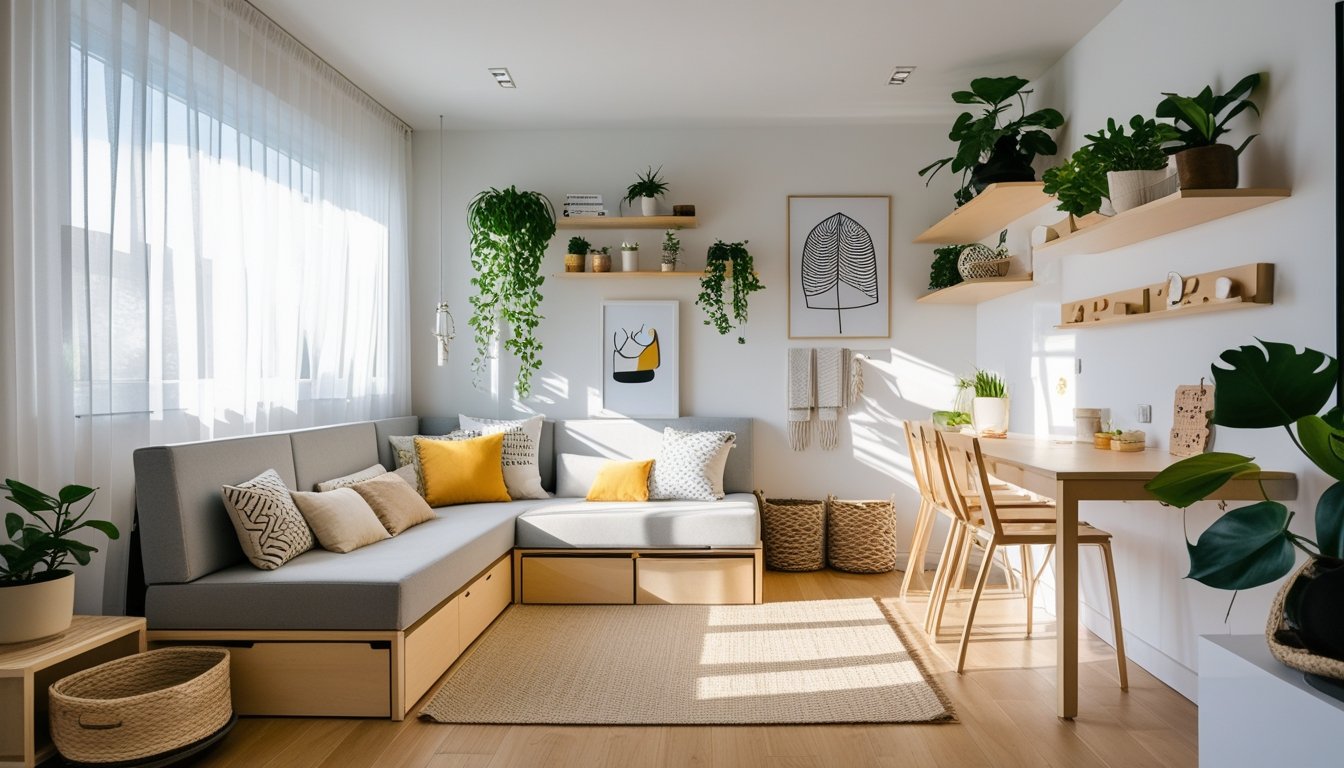
By incorporating innovative furniture and clever storage ideas, we can drastically enhance the available space in our small homes. These techniques go beyond mere aesthetics, offering practical solutions that make everyday living both enjoyable and organised. Whether it's multifunctional furniture or vertical storage hacks, tapping into these strategies allows us to reclaim valuable square footage while enhancing the visual appeal.
Creative design techniques contribute significantly to the perceived spaciousness of small areas. Using light colours and strategic lighting, we can create an open and airy feel that belies the actual size of the space. Not only do these methods improve functionality, but they also contribute to an inviting atmosphere, making our homes places we truly love to inhabit.
Key Takeaways
- Multifunctional furniture and effective storage boost space utility.
- Colour and lighting techniques enhance perceived spaciousness.
- Design solutions combine aesthetics and practicality.
Innovative Furniture and Clever Storage Ideas
Maximising the utility of small living spaces requires a focus on innovative furniture pieces and clever storage solutions. By incorporating multifunctional furniture, hidden storage, and vertical or built-in storage units, we can unlock incredible potential to organise and beautify our homes. Employing clear and lightweight materials further enhances spatial perception.
Maximising Space With Multifunctional Furniture
The use of multifunctional furniture is vital for optimising small spaces. Sofa beds, for instance, are excellent for providing seating during the day and a comfortable sleeping area at night. Storage ottomans offer dual benefits as stylish coffee tables with ample hidden storage for blankets or magazines inside.
For dining and workspace needs, a fold-down table can be mounted on a wall, effectively serving as a table when needed and folding away neatly to maximise floor area. Nesting tables also offer flexibility with their stackable nature, allowing us to adjust the number of tables available according to our requirements.
Incorporating Hidden Storage Solutions
Smart storage solutions can transform living spaces and enhance functionalities. Hidden storage elements such as beds with drawers or under-bed storage bins utilise often-neglected areas. Additionally, murphy beds, which fold into a wall or cabinet when not in use, free up substantial floor area.
Loft beds or depot beds provide ample space underneath, perfect for creating a study or storage zone. Integrating storage solutions within furniture, like storage ottomans with removable tops, allows for easy access while maintaining a neat appearance and keeping clutter at bay.
Utilising Vertical and Built-In Storage
To achieve maximum organisation, vertical and built-in storage solutions are essential. Floating shelves act as a canvas for decorative items without taking up valuable floor space. Similarly, built-in shelves can fit snugly into any available wall nook, providing a seamless storage solution.
Vertical storage also includes over-the-door organisers, ideal for storing shoes, accessories, or cleaning supplies. By utilising these overhead spaces, we capitalise on storage potential, opening up the room's centre for open movement and better usability.
Furnishing With Clear and Lightweight Materials
We also benefit from using clear and lightweight materials when furnishing small spaces. Clear furniture like glass-topped tables or acrylic chairs can create an illusion of space by being visually less intrusive. These pieces blend into the surroundings while providing functionality.
Additionally, lightweight, movable furniture allows us to quickly adapt our space to various needs. This flexibility is crucial in small living areas where every inch counts. By combining clear and lightweight pieces, we maintain a feeling of openness and lightness, making our homes feel less cluttered.
Creative Design Techniques to Open Up Small Living Spaces
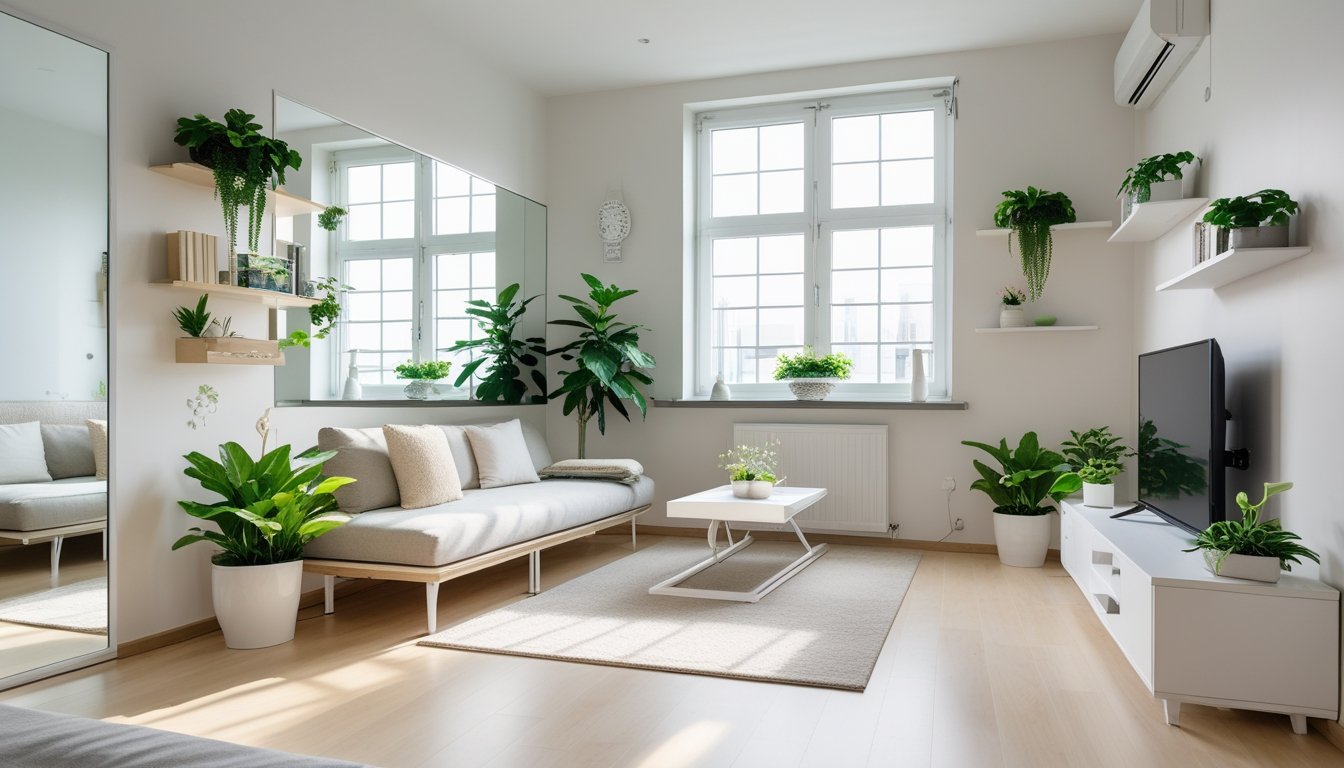
Maximising small spaces requires creativity and strategic design choices. By using mirrors and reflective surfaces, integrating sliding doors and room dividers, and effectively utilising corners, we can transform compact living areas into open, functional environments.
Incorporating Mirrors and Reflective Surfaces
Mirrors and reflective surfaces play a significant role in small-space living by giving the illusion of depth and amplifying light. Strategically placing mirrors opposite windows can enhance natural light and create a brighter ambience. Reflective surfaces such as gloss-finish furniture and metallic accents also contribute to this effect, making spaces feel larger and more open. Using oversized mirrors or mirrored wall panels can dramatically alter the perception of a room, encouraging a feeling of expansiveness even in limited spaces. Employing these elements not only adds aesthetic appeal but also enhances the practicality of small living environments by making the most of available light.
Using Sliding Doors and Flexible Room Dividers
Sliding doors and flexible room dividers can redefine a space without occupying valuable floor area. Unlike conventional doors, sliding mechanisms save space and provide versatile transitions between areas. They can be used to close off sections for privacy or open up space when needed. Flexible room dividers, like track-mounted panels, offer similar functionality by allowing us to adapt room layouts as required. These design choices are particularly beneficial in open-plan living areas where separate zones are desired. Incorporating translucent or textured glass in these elements maintains privacy while permitting light to flow, maintaining the overall sense of openness.
Defining Zones and Utilising Corners Effectively
Creating distinct zones within a small living space ensures that every area serves a clear purpose. This can be achieved through clever use of rugs, furniture arrangements, and lighting variations that demarcate different functions, like a dining area or a cosy reading nook. Efficiently using corners, often neglected in interior design, can maximise every inch of space available. Corner shelves or ladder shelves make excellent use of these areas, providing additional storage or displaying decor. Combining these strategies enhances functionality and makes small spaces appear better organised and larger. Emphasising organisation with a clear purpose in each zone maximises the usability and comfort of compact living areas.
Frequently Asked Questions
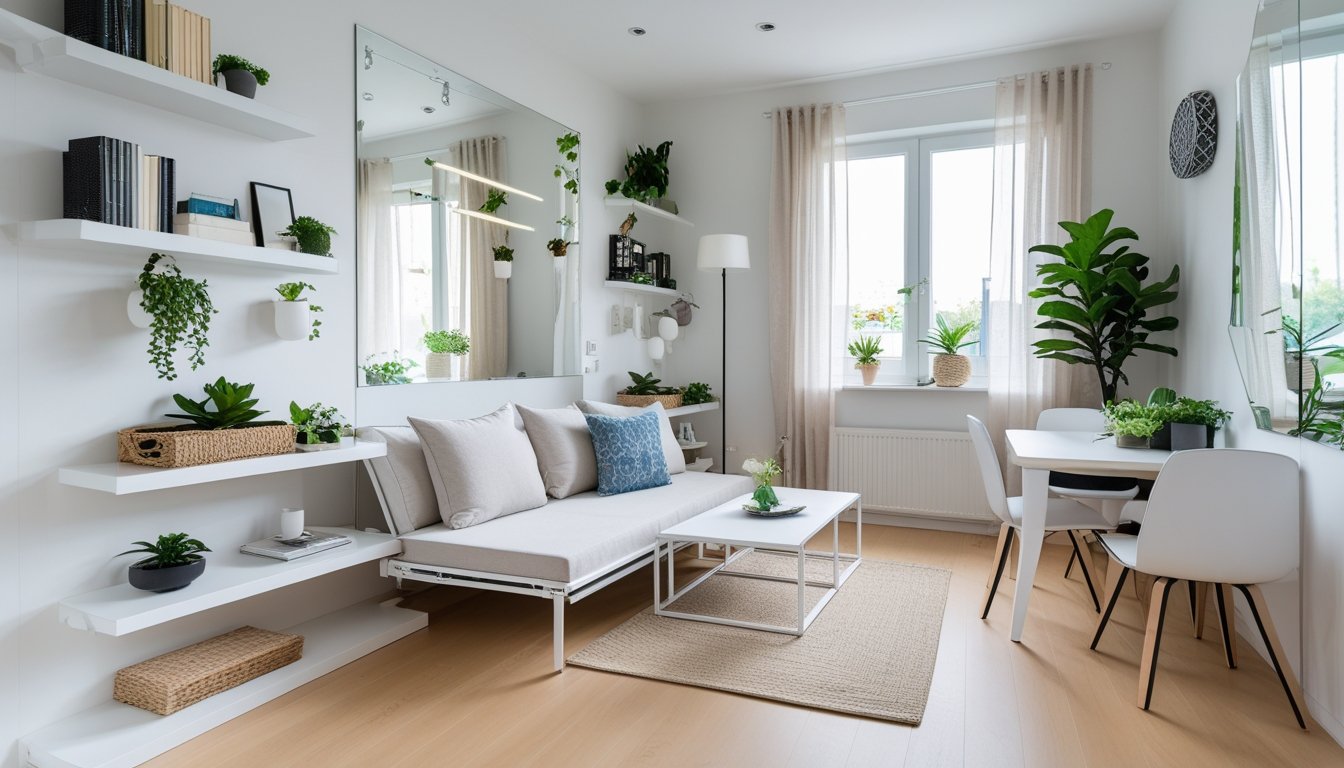
In small living spaces, strategic use of storage, furniture, and design techniques can greatly enhance functionality and the perception of space. Leveraging versatile, visually expanding elements provides practical and aesthetic benefits.
What are some innovative storage solutions for compact flats?
Optimising vertical space with wall-mounted shelves or cabinets can significantly increase storage options without occupying valuable floor space. For underutilised areas, consider storage boxes that slide under furniture or built-in storage benches.
How can multipurpose furniture be utilised to maximise space in a small room?
Furniture that serves multiple functions can transform how we use our living areas. Sofas that convert into beds, ottomans with hidden storage, and fold-out tables all offer flexibility, making them ideal choices for maximising room utility.
Are there colour schemes that can help a small space feel larger?
Light, neutral colours can brighten a room and make it feel more spacious. Soft hues such as pale blues, soft greys, and off-whites reflect natural light, creating an airy and open feel. Complementary accents can add depth and interest without overwhelming the space.
What are the best lighting techniques to create the illusion of more space?
Layered lighting, including a mix of overhead, task, and ambient lights, helps distribute illumination evenly and enhances spatial perception. Using floor and table lamps at varying heights adds warmth and depth, opening up the room visually.
How does decluttering influence the perception of space in small living areas?
A clean, clutter-free environment allows us to appreciate the architecture and layout, making even the smallest rooms appear more open. Regularly sorting and removing unnecessary items can transform our living spaces from feeling cramped to comfortable.
What are effective ways to use mirrors in decorating to expand a room visually?
Mirrors reflect light and create the illusion of depth, serving as a savvy tool for enlarging spaces. By strategically placing mirrors opposite windows or light sources, we can enhance brightness and optical space, making the room feel larger.